Is it a Honeybee? A Quick ID Guide
Before calling a swarm collector, use this guide to identify your visitors. Most “bee” calls are actually for wasps or bumblebees, which have very different needs.
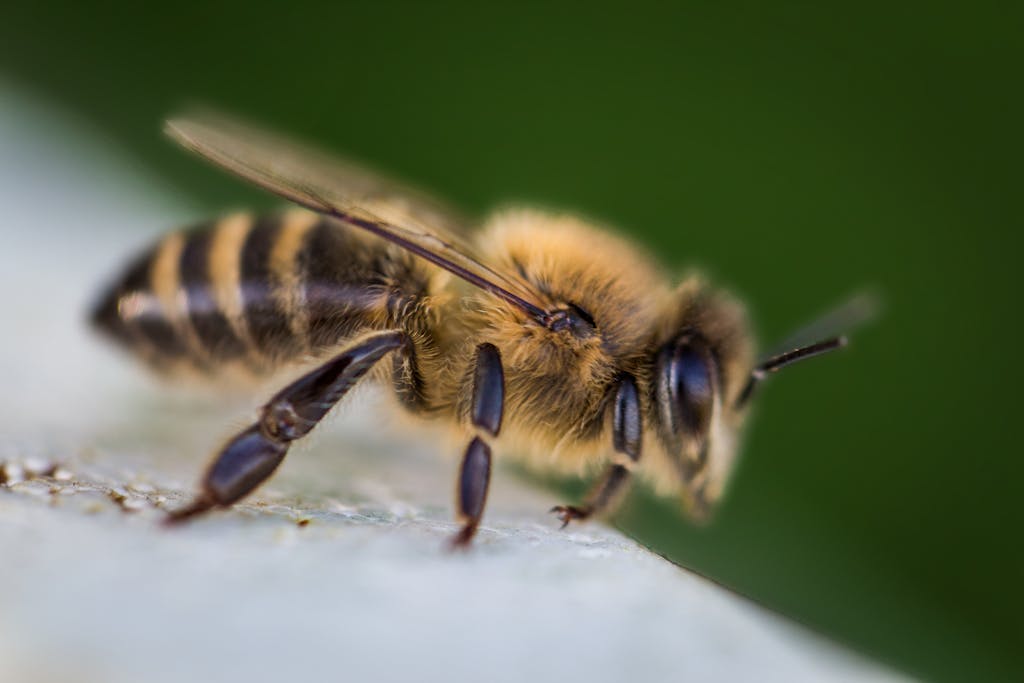
Honeybee
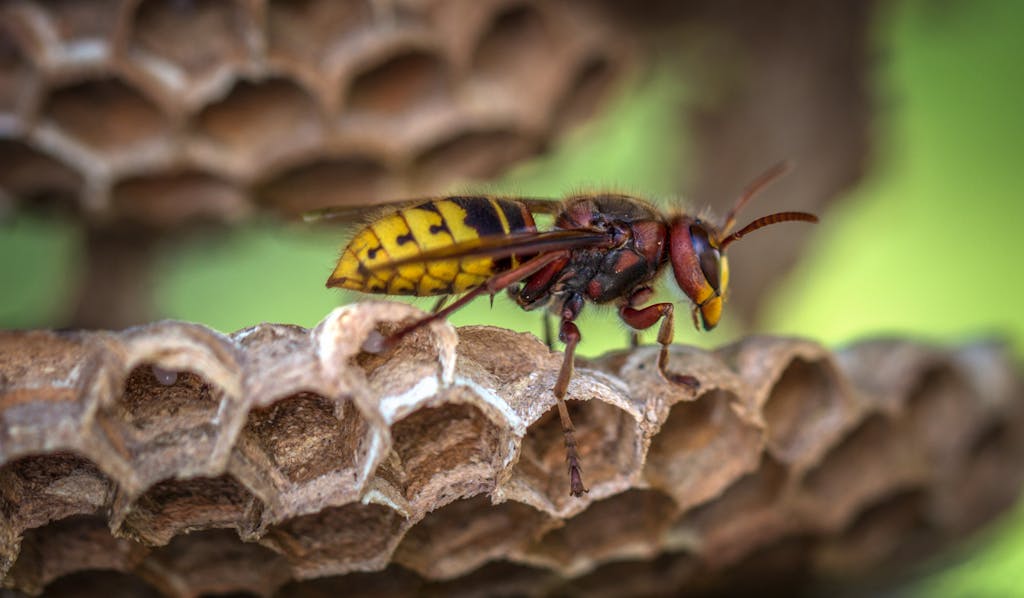
Wasp
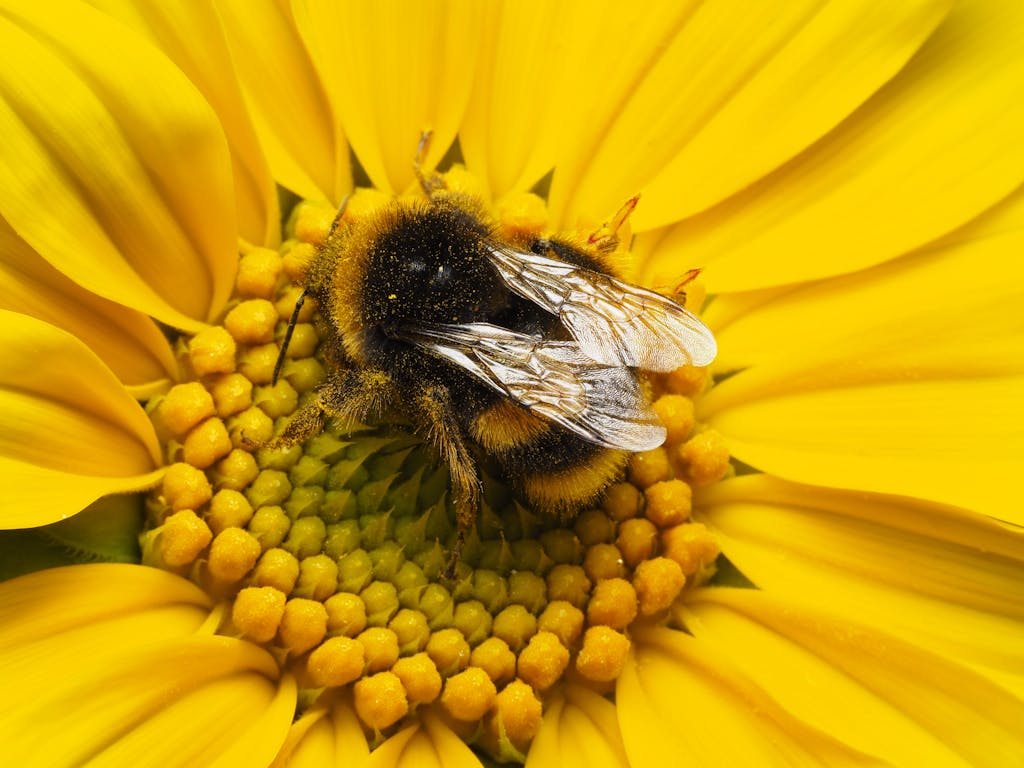
Bumblebee
2. Identifying a Honeybee Swarm
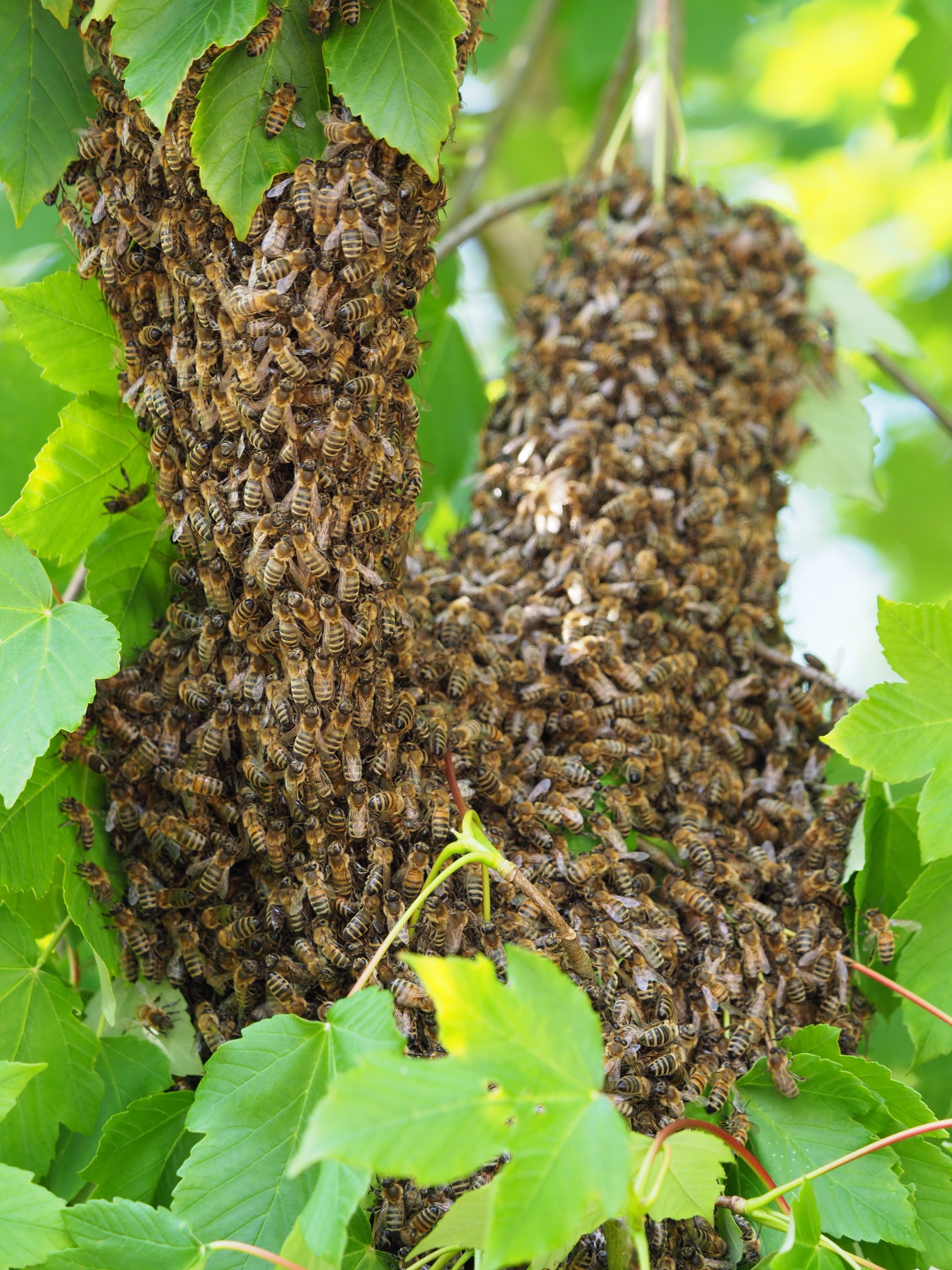
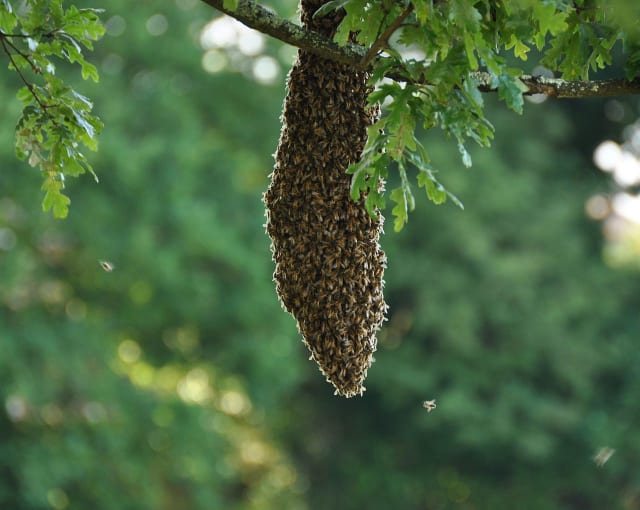
If you see a large, rugby-ball shaped cluster of thousands of bees hanging from a tree branch, fence, or wall, you likely have a Honeybee Swarm.
- Behavior: They are usually very docile because they are homeless and have no honey to protect.
- Action: Contact our Swarm Coordinator immediately. Do not spray them with water or pesticides.

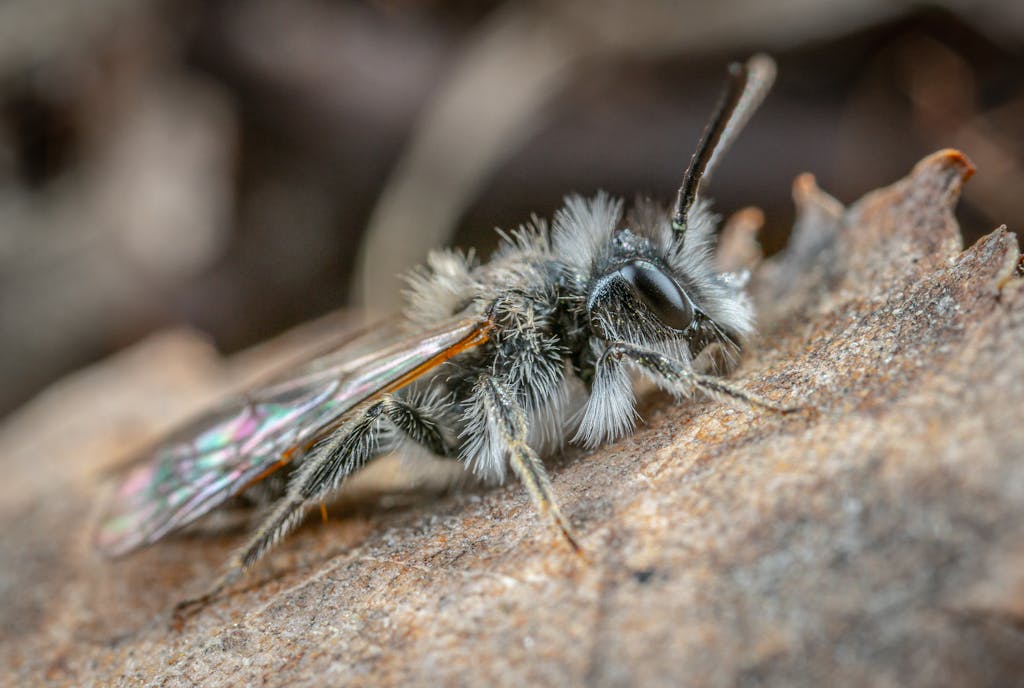
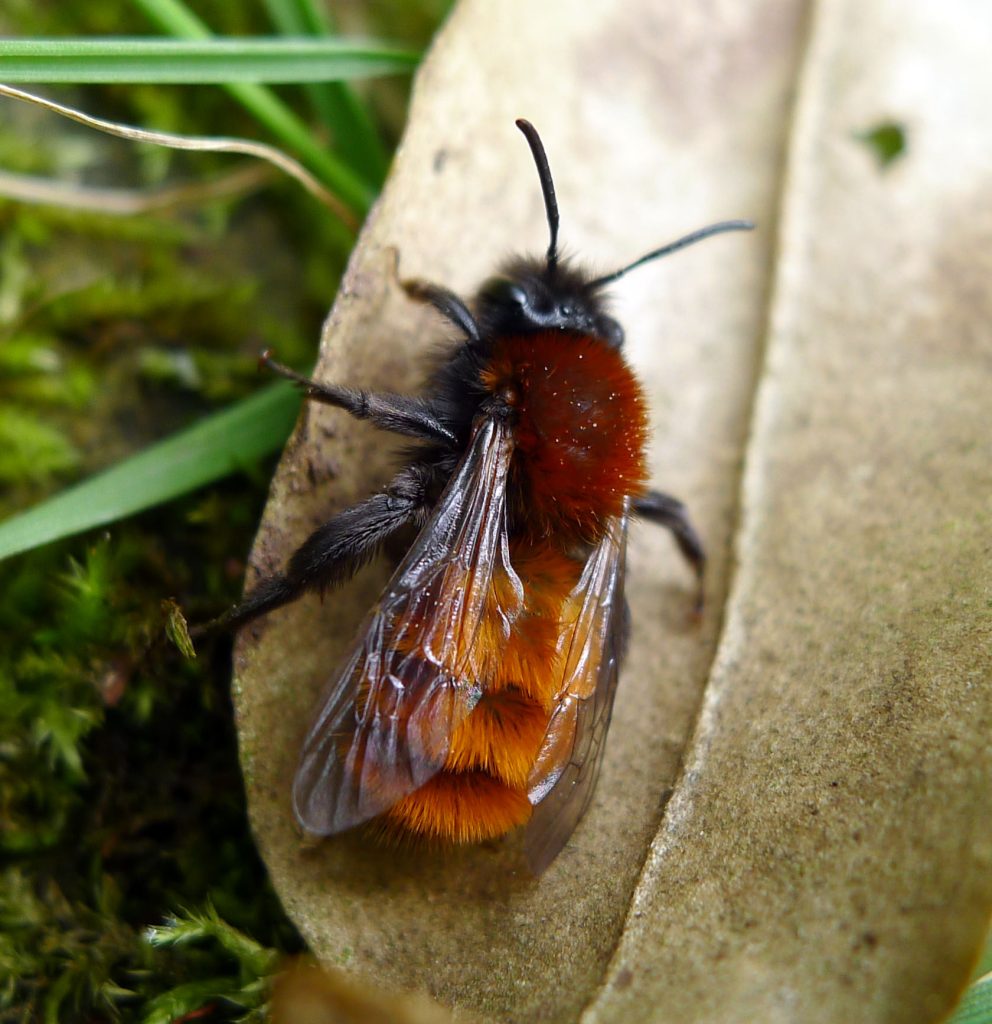
Tawny Mining Bee
3. “Bees” in the Ground or Walls
- In the lawn: These are likely Solitary Mining Bees. They are harmless, do not swarm, and are excellent pollinators. They will disappear on their own in a few weeks.
- In bird boxes or under decking: These are almost always Bumblebees. They live in small families (usually fewer than 100) and are very peaceful. They die out naturally in late summer.
The Ashy Mining Bee