Our Apiaries
Hands-on beekeeping at the Hastings & Rother apiaries
1Advice, support and practical beekeeping
At Hastings & Rother Beekeepers’ Association we are striving to give members advice, support and access to practical beekeeping at our apiaries.
Last updated 15 November 2026
The Bee Scene
Our monthly information sheet, the “Bee Scene”, gives you news and events month by month, so please keep an eye on it.
Please feel free to send in any articles and photos you would like included. We are always looking for articles.
Our WhatsApp groups
Our WhatsApp groups are live all the time, so you can share anything bee related. You can:
- Upload pictures of your apiary or individual bee photos
- Share your experiences throughout the year
- Ask questions and seek advice
- Ask for help with your own hives
- Get advice and practical help assembling equipment
- Contact other members for advice and support
2Our two apiaries
We are currently improving the experience at our apiaries.
Seven Fields, Netherfield
Our apiary at Seven Fields currently has 3 National hives, one of them with a double brood box arrangement. They are set for the winter, with hopefully enough stores to see them through. These were very strong hives throughout 2026 and produced some very nice honey this autumn.
Those who have visited this year will know that the site is quite restrictive for giving members a good, close-up experience. Attending the summer apiary meetings is still worth it just to meet other members, talk everything “bees” and see how others are getting on.
Ivyland Farm
Because of the restricted space at Seven Fields, we have this year reopened the apiary at Ivyland Farm. This is by far the best site, but it needed an enormous amount of work to bring it back into service, as it had become overgrown and was not in a good state.
During this year we have made enormous strides in bringing the site back into action. Some of you attended our first meeting there on 4th July and have seen the progress so far. We still have much to do to keep improving the site and the experience for members.
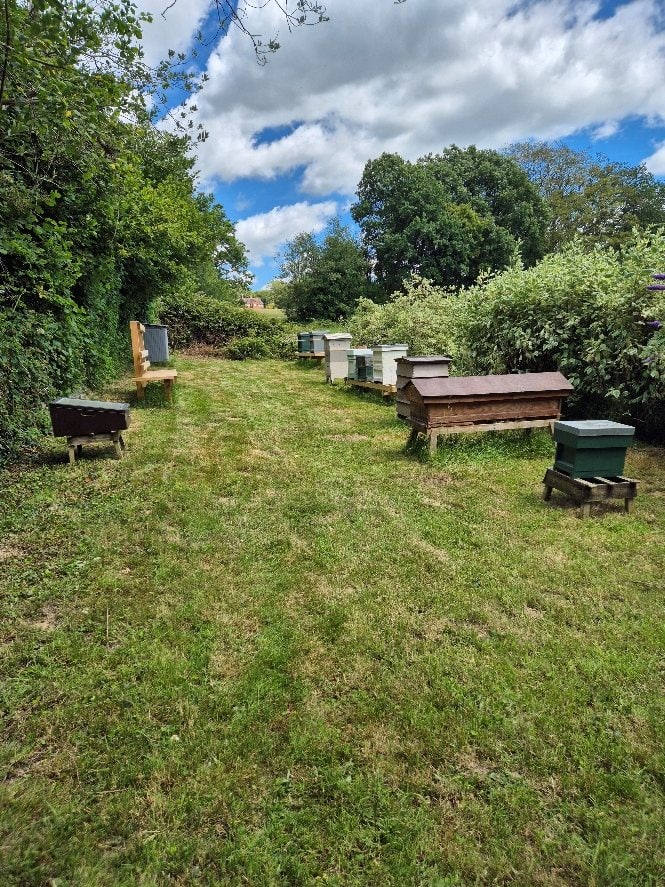
The Ivyland Farm apiary has a variety of hive types to give members a wider experience, and we have other plans in the pipeline. This is how it looks at the moment:

3The apiary year so far
- MayA swarm from Hastings becomes our standard NationalThe largest swarm ever collected, from a college car park.
- May & JuneTwo more swarms settle into the 14 x 12 NationalsBoth from Hastings, and both now very settled.
- 4th JulyFirst members’ meeting at the reopened apiaryThe first chance to see the progress at Ivyland Farm.
- AugustTwo queens in one hiveAn inspection of the long hive found a queen at each end, so it became two colonies in one hive.
- OctoberA late arrivalA small colony rescued from a pile of old equipment, given fondant and watched over for the winter.
- SpringA top bar hive joins the apiaryPlus swarm control and splitting, put into practice.
4Our hives
We currently have the following hives at the apiary, all set for the winter. The purpose of having a variety is for members to see and experience the different types and formats.
Standard National hives

The standard National on the left was set up from a swarm collected in Hastings in May this year. It was the largest swarm I have ever collected, and it was in a college car park, so you can imagine there were many spectators while I was collecting it.
The small standard National on the far right was a late acquisition in October 2026. A member called to ask if we could help a friend whose bees had moved into a pile of old equipment. I collected them and they are in the box above. It was not a strong hive, and as it was such a late acquisition I have put some fondant in there and will keep an eye on them. It will be difficult getting them through the winter, but we will do our best.
14 x 12 National hives
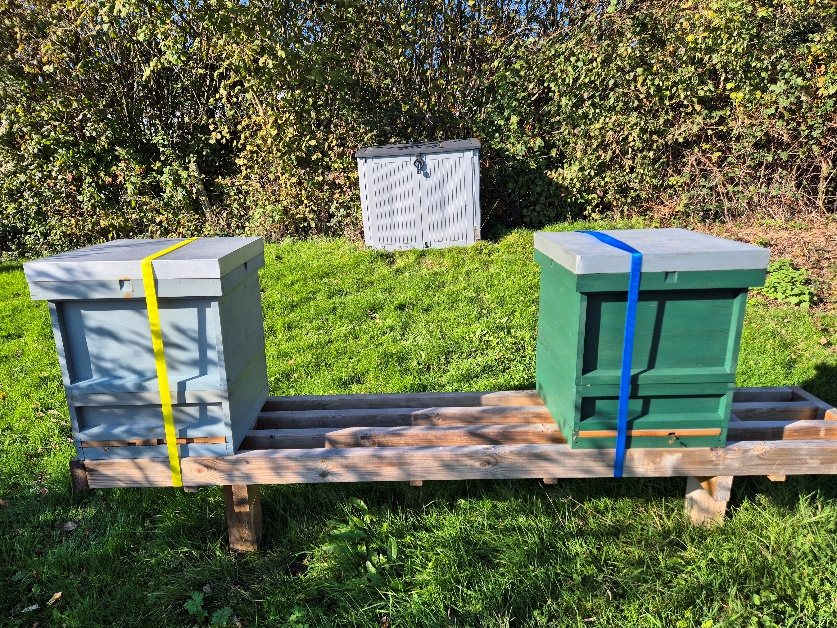
The two hives in the picture are 14 x 12 Nationals. They are set in their winter configuration and strapped down, as we had storm warnings and these are a little more exposed than the others in the apiary.
Both were swarms collected in May and June this year, both from Hastings. We have been monitoring them carefully all year and they seem to be very settled bees that have managed to get used to these large boxes. Those of you familiar with 14 x 12 brood boxes will know it takes new bees some time to draw out and settle into them.
The 14 x 12 frames are basically equivalent to a brood and a half, but all in one box. They have their advantages and some disadvantages.
The “Flow Hive”
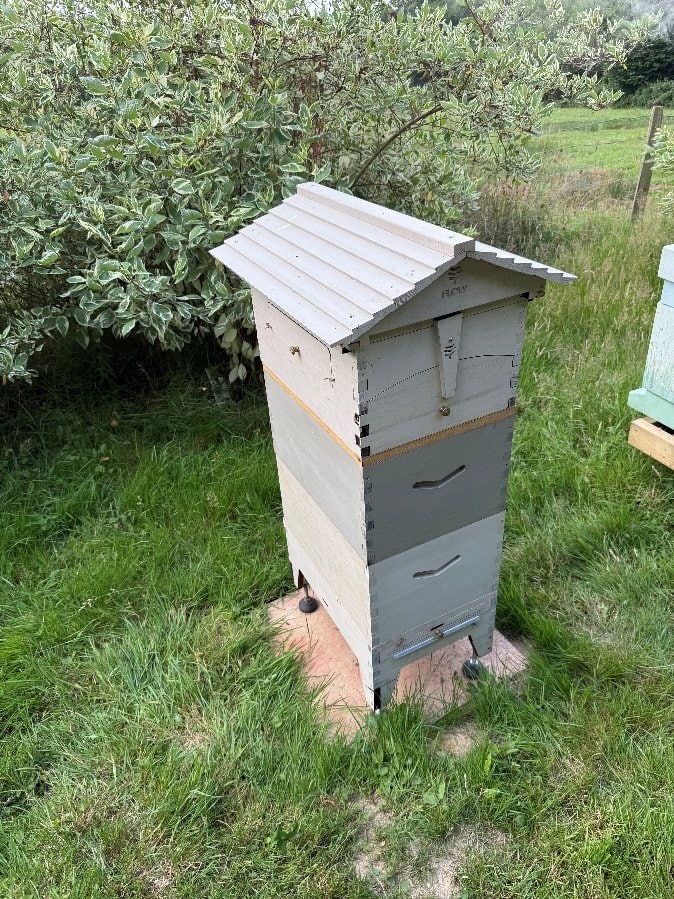
The Flow Hive is a different type of hive, and there are many discussions about whether they work in our climate. Someone in our region has 3 of them and is happy with their progress and honey production. We had one in the shed, so we have set it up and put some bees in it, which is a good experience for all of us.
The hive takes Langstroth frames, which are longer than National frames and are used only in the brood box. The honey is stored in plastic cassettes rather than traditional hive frames.
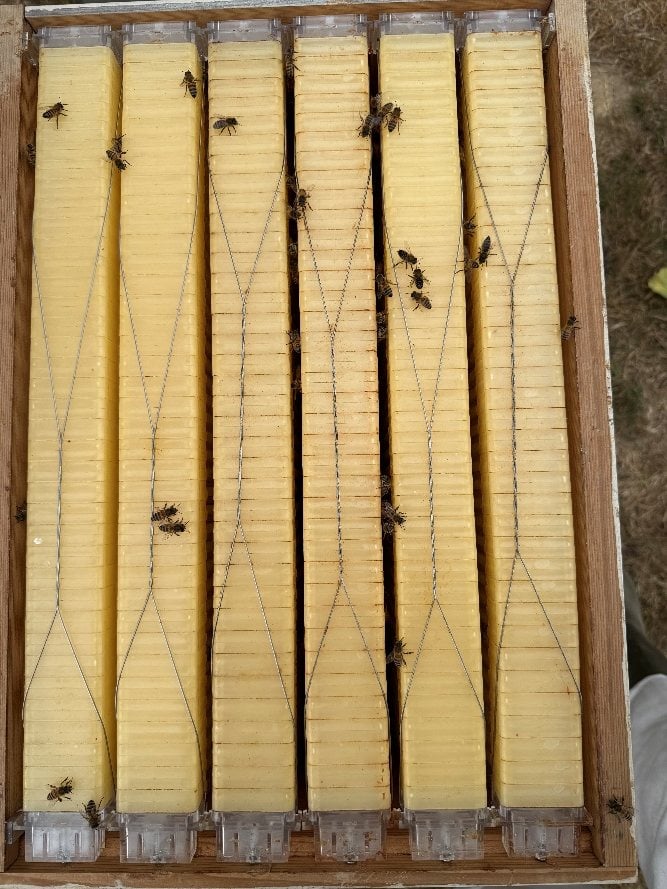
This is our first year with the Flow Hive and we are building it up. Hopefully we can see how we get on during next year. It is very new to all of us, so we are learning as we go along.
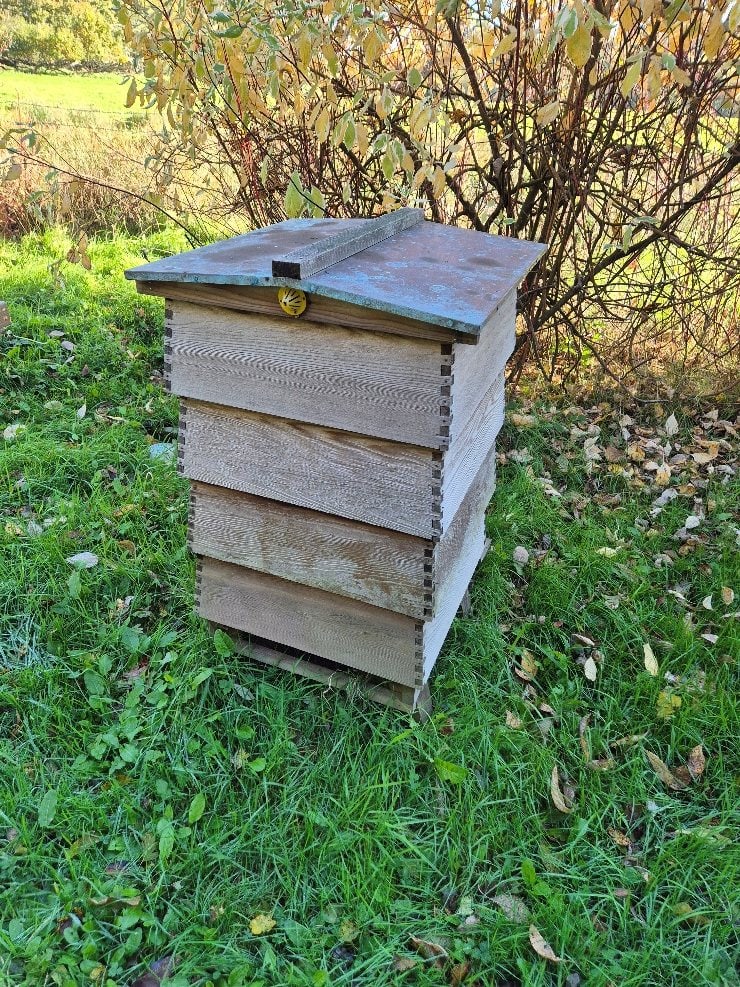
The WBC hive
The WBC is a hive we recovered from Sedlescombe earlier in the year. It had not been looked at or inspected for 2 years, which made it difficult to move to our apiary, and there is still some work needed next year to bring it up to standard.
The WBC takes standard frames, as used in the National, but fewer of them, as the brood box inside is slightly smaller than a National. Because of this it is generally considered that it should be run on a double brood box to give a strong colony enough space.
The WBC is considered the “traditional” look of a beehive. I quite like it myself, but as many beekeepers will tell you, the double brood box does have its disadvantages when doing your regular inspections.
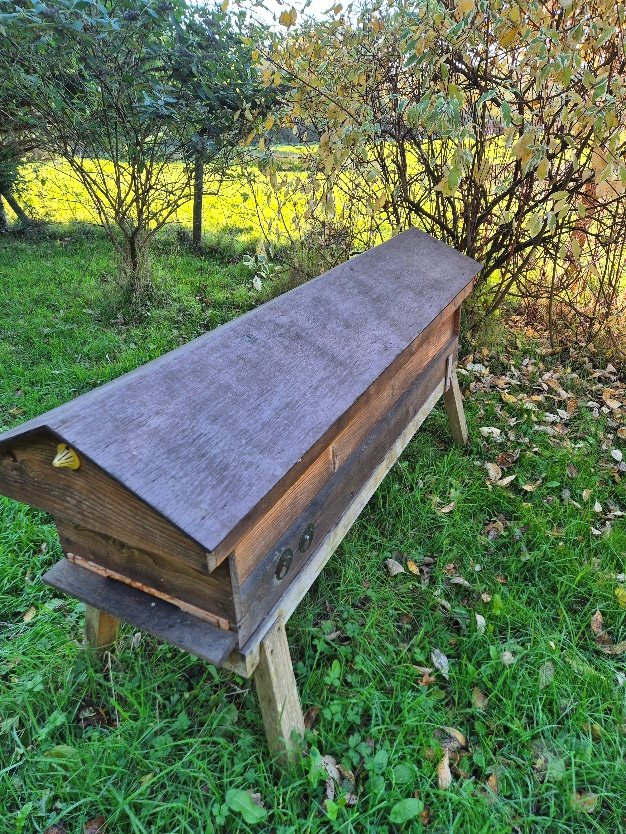
The “Long Hive”
The long hive is not to be mistaken for a top bar hive.
We acquired this hive earlier in the year. It was empty, which gave me the opportunity to clean and refurbish it. It takes standard National brood frames for both the brood and the honey stores, and the queen excluder can be placed at any point to suit the size of the colony.
This is a first for me, so I am learning as I go along. We introduced a colony of bees this year and have been watching them with interest. The bees were set to enter and leave by the right-hand end of the hive and store honey towards the left.

Two queens, one hive
During an inspection in August we found a suspicious number of bees in the left end of the box, well away from the stores. On close inspection, and a little head scratching, we noticed that there was a queen in each end of the hive. We are not sure how this happened, as there is a queen excluder, but two colonies there were.
We therefore put in a divider and opened up an exit at the other end of the hive. We now have 2 colonies in the same hive. The new colony was a little short of stores, hence the fondant I added to help them on their way.
We hope the variety of hives at the apiary will give members a good and varied experience at apiary visits. The variety is certainly keeping me busy and has put me on a steep learning curve.
5Plans for next year
We still have plans for the apiary during next year. Those of you who attended our first winter meeting at Mountfield Village Hall will know that we intend to put into practice in the apiary the things we demonstrate in the winter meetings. Swarm control measures, splitting hives and so on will be carried out. This should be interesting, and it could also make colonies available to members who need them.
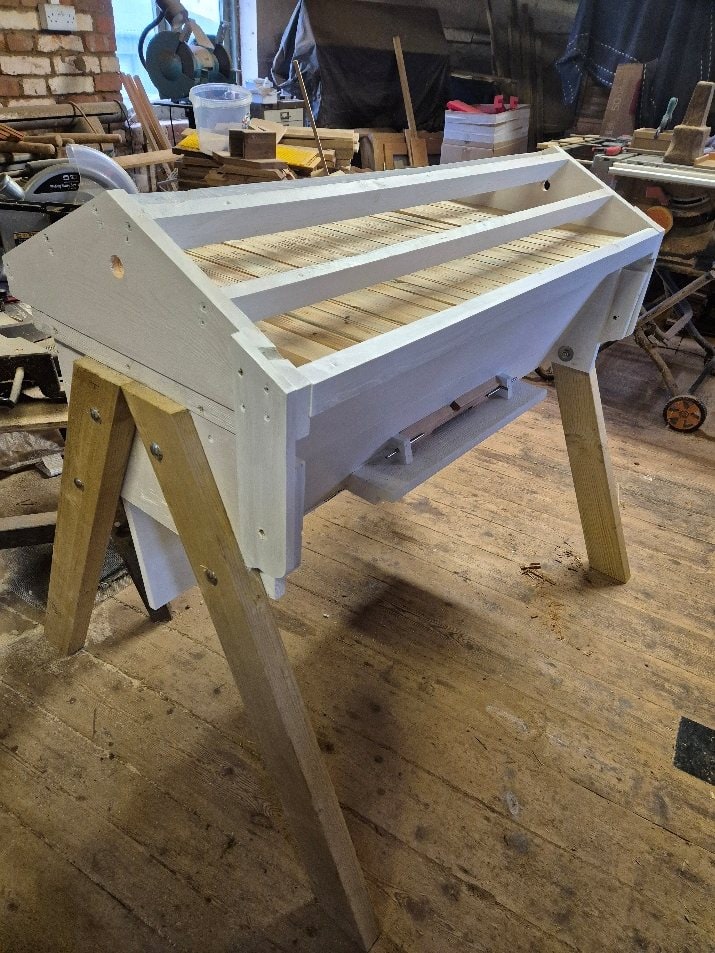
A top bar hive is on its way
I am also nearly finished refurbishing a top bar hive. It will be in the apiary early in the spring and we will introduce some bees as soon as we are able. It will be another type of hive to look at and experience.
Come and see our apiaries for yourself
Meetings at our apiaries are a great way to meet other members and see the different hives up close.
See upcoming events Join the association